Abstract
Purpose of Review Despite the growing number of studies on interoception in addiction research, a comprehensive review of these findings is still lacking. The goal of this paper was to conduct a systematic review of empirical studies to assess the evidence for interoceptive deficits in individuals with substance use disorders (SUDs), identify gaps in the existing literature, and propose directions for future research.
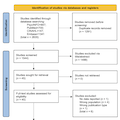
Recent Findings From 1,544 records identified in APA PsycINFO, PubMed, CINAHL, and Embase using predefined search terms, 39 studies met eligibility criteria. Of these, 14 examined alcohol use disorder, 12 heterogeneous substance use, 6 opioid use disorder, 4 smokers, 2 cocaine use disorder, and 1 cannabis use. With respect to interoceptive domains (accuracy, sensibility, awareness), 12 studies assessed accuracy only, 19 assessed sensibility only, and 8 measured both; only one study additionally evaluated interoceptive awareness. Behavioral tasks (e.g., heartbeat counting) and self-report questionnaires (e.g., Multidimensional Assessment of Interoceptive Awareness; MAIA) were the most common measures of interoceptive accuracy and sensibility, respectively. Neuroimaging work was scarce, with only four studies examining neural correlates.
Summary Across studies of interoception in SUDs, the most consistent pattern is reduced interoceptive accuracy relative to healthy controls, particularly in alcohol use disorder where impairments were most robust, though findings for other substances showed greater variability. Evidence for interoceptive sensibility is mixed, and work on interoceptive awareness remains sparse. The literature is constrained by a narrow emphasis on two dimensions and by heavy reliance on the heartbeat counting task, which has been widely criticized for validity concerns. Future research should assess multiple interoceptive dimensions across modalities, develop and validate more robust measures, and address potential confounders such as smoking status.