Abstract
Background Tobacco smoking continues to be a leading cause of preventable morbidity and mortality globally, with the success rate of unaided cessation remaining consistently low. Understanding the neurobiological mechanisms of smoking cessation is crucial for improving quit rates. However, there has been a lack of studies examining brain network changes associated with smoking cessation over time. In this study, we aimed to investigate longitudinal changes in the functional connectivity (FC) of large-scale brain networks underlying smoking cessation outcomes using resting-state functional magnetic resonance imaging (fMRI).
Methods A total of 98 treatment-seeking smokers participated in a 6-week cessation program and underwent resting-state fMRI scans before and after the intervention. Independent component analysis identified the salience network (SN), executive control network (ECN), and default mode network (DMN) components, and region of interest (ROI)-to-ROI FC was compared between successful and unsuccessful quitters using a group × time mixed-effects model. Correlations with smoking-related measures were explored.
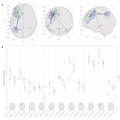
Results Significant group-by-time interaction effects were found in FC, particularly involving connections between SN and ECN, as well as between the SN and DMN. Specifically, successful quitters exhibited greater baseline FC in the SN-ECN and SN-DMN circuits, which tended to normalize during the cessation process. Exploratory correlational analyses revealed trends suggesting that stronger pre-quit connectivity between the SN and ECN was associated with greater withdrawal severity and longer smoking history in successful quitters.
Conclusions Taken together, the normalization of initially elevated pre-quit FC in SN-ECN and SN-DMN circuits may reflect an adaptive neural process that supports successful withdrawal management and attentional reallocation during cessation. The identification of these neural substrates not only enhances our mechanistic understanding of smoking cessation over time but also underscores the need for targeted interventions that focus on these neural circuits to enhance quit outcomes.