Abstract
Background: Emotion dysregulation is a core feature of bipolar disorder (BD), yet its behavioral expression during depressive episodes, and potential differences between its types, BD-I and BD-II, remain unclear. This study used automated facial-expression analysis during naturalistic affective film viewing to examine subtype-specific and context-dependent emotional responding in bipolar depression.
Methods: The sample included 135 participants: 69 healthy controls and 66 patients with BD (BD-I, 23; BD-II, 43). Participants viewed nine emotionally evocative film clips spanning negative, positive, neutral, and socially threatening contexts, while their facial expressions were continuously recorded and quantified using computer vision-based facial-expression analysis.
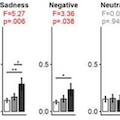
Results: Patients with BD-I showed a distinct, context-dependent facial-expression profile, characterized by greater negative responses across multiple contexts than other groups. Specifically, they showed increased sadness during sad, reward, and amusing clips, and elevated anger during sad and neutral clips. In socially threatening contexts, BD-I participants showed a multivalent pattern of elevated anger, fear, and joy, suggesting poorly coordinated or context-incongruent affective expression. In contrast, BD-II participants did not differ significantly from healthy controls on any emotion, despite depressive symptom severity comparable to BD-I participants.
Conclusions: These findings suggest that facial-expression patterns in bipolar depression differ across subtypes. BD-I may be characterized by heightened negative reactivity and altered context-appropriate modulation of emotional expression, whereas BD-II may not show comparable alterations in overt facial output. Automated facial-expression analysis during naturalistic stimulation may provide a useful behavioral marker for characterizing