Abstract
Background: Alcohol craving is associated with drinking behaviors despite negative consequences and relapse following periods of abstinence or treatment. Accurately forecasting alcohol craving is crucial for preventing alcohol consumption and relapse, thereby mitigating alcohol-related problems. Previous studies have assessed alcohol craving using diverse modalities such as psychological assessments, neurophysiological measures including electroencephalography (EEG) or heart rate variability (HRV) at a single time point, and digital phenotypes collected longitudinally via smartphone applications. However, alcohol craving is inherently heterogeneous and multidimensional across individuals and over time, making it difficult to capture using any single modality alone. In contrast, multimodal artificial intelligence (AI) enables the prediction of alcohol craving by integrating complementary behavioral and neurophysiological features.
Objective: This study aimed to develop and evaluate AI models to forecast next-day alcohol craving in individuals with problematic alcohol use with multimodal datasets.
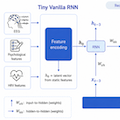
Methods: We analyzed multimodal datasets comprising smartphone-based digital phenotypes collected over 28 days, along with baseline EEG, HRV, and psychological measures in a prospective longitudinal study of 60 participants with problematic alcohol use. A tiny multimodal recurrent neural network (RNN) was implemented, in which representations of static baseline features were encoded into a latent representation and used to initialize the hidden state of the RNN. Model performance was evaluated using accuracy, weighted F1 score, macro F1 score, and mean absolute error (MAE).
Results: The multimodal model consistently outperformed the unimodal model based on digital phenotypes alone, achieving higher accuracy (0.56 vs 0.45), weighted F1-score (0.51 vs 0.38), and macro F1 score (0.37 vs 0.24), along with lower MAE (0.68 vs 0.90). At the individual level, 72% of participants showed improved prediction accuracy with the multimodal model. These improvements were statistically significant (Wilcoxon signed-rank test, P<.001; paired t-test, P<.001).
Conclusions: Integrating digital phenotypes with neurophysiological and psychological features enhances the prediction of short-term alcohol craving dynamics. This approach may enable more precise and timely personalized interventions for individuals at risk of relapse.